

Tiny labels.
High stakes.
Most people don't realise that certain chemical compounds and essential oils can trigger seizures — not just when ingested, but in some cases through smell alone. Eucalyptus is one well-known example. There are many others.
For families living with epilepsy, every product that comes into the house is a potential risk: cleaning products, cosmetics, toiletries, food. The standard approach is to crouch in a supermarket aisle, squinting at a tiny label, cross-referencing against a list you're trying to remember, hoping you haven't missed anything.
It's exhausting. And it shouldn't have to be that hard.
"I didn't know that these triggers existed. I have been using a decongestant that was unbeknown to me which was full of oils that were on the list." — Nicole · Victoria
Open. Check.
Understand the risk.
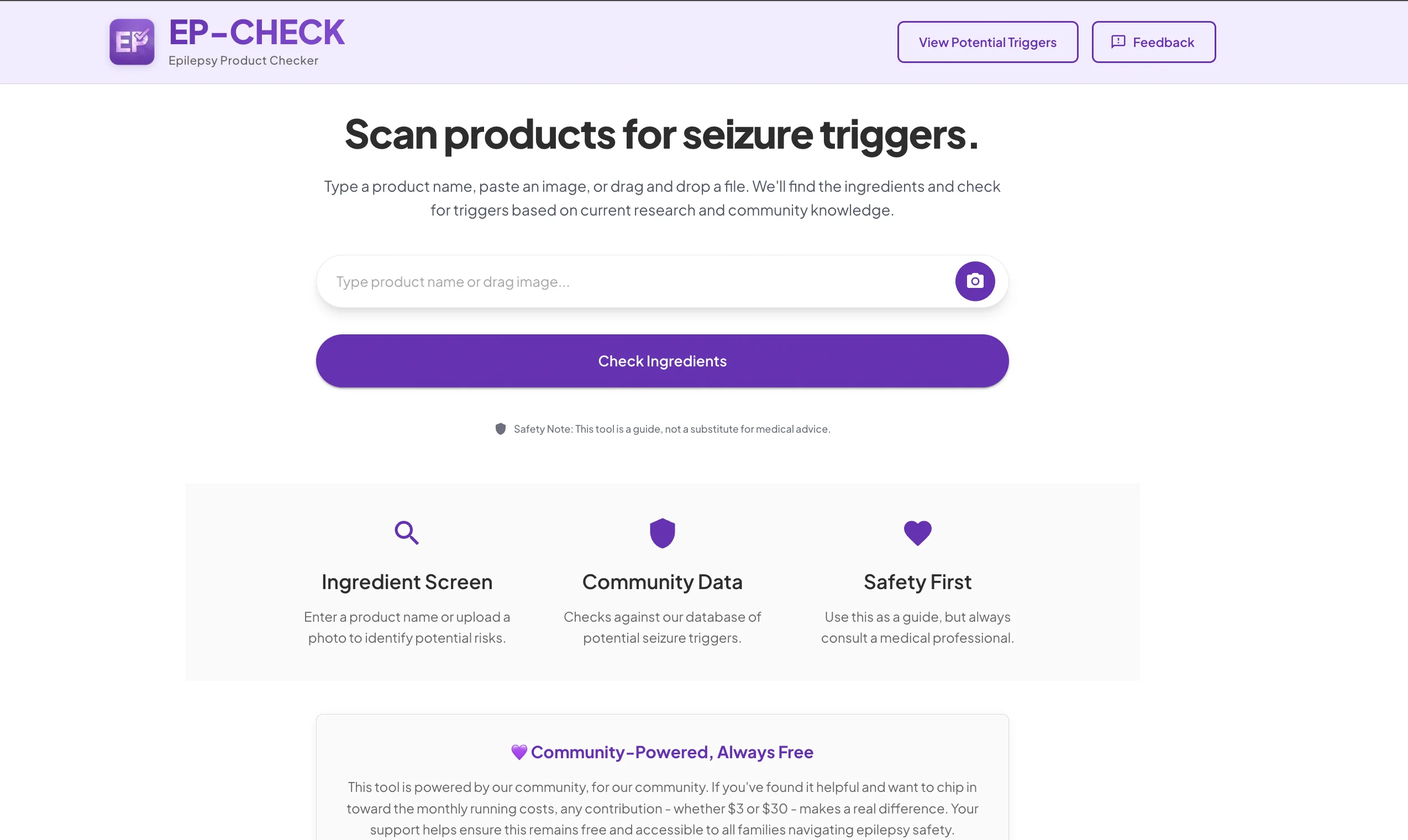
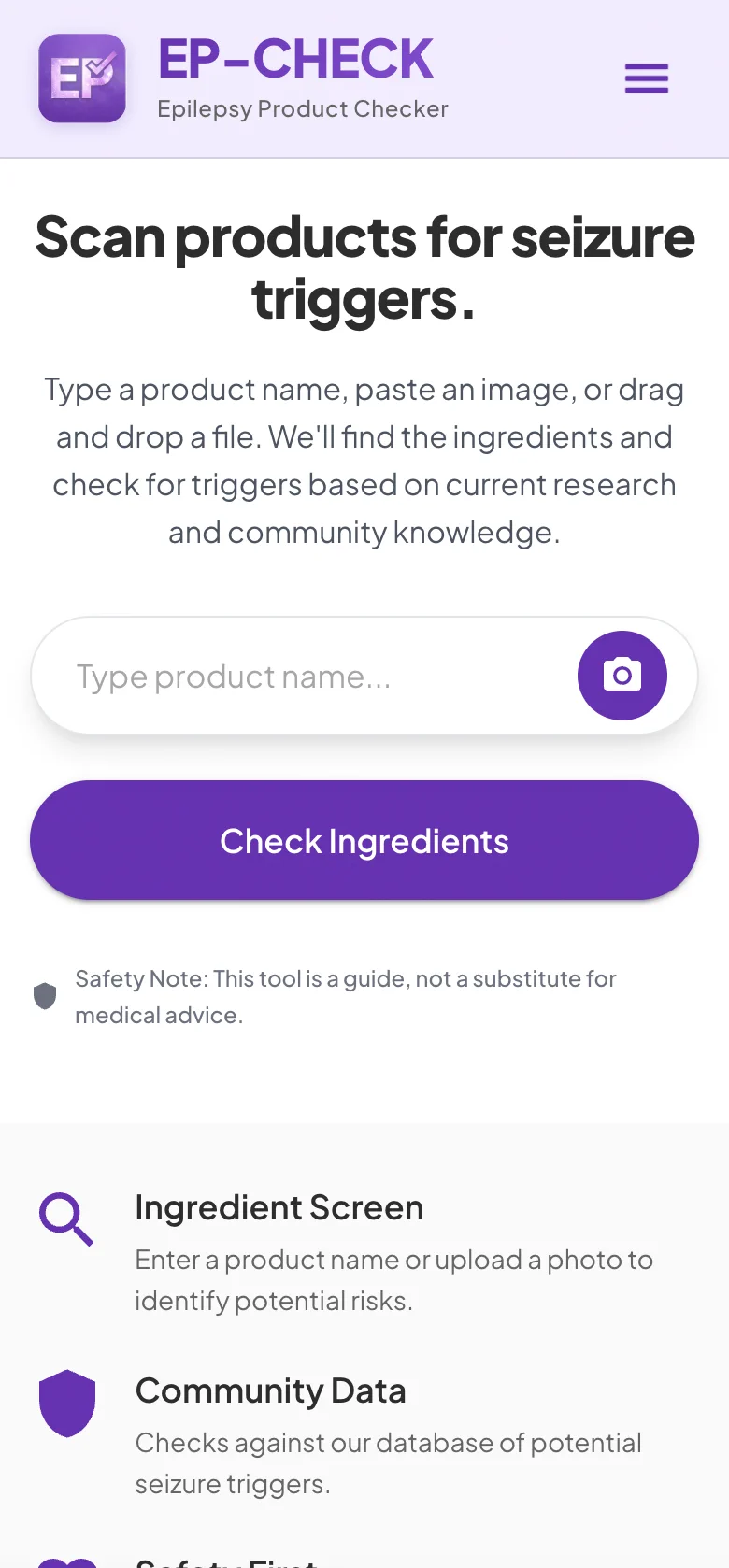
Open EPCheck on any device. Type a product name, paste a label photo, or upload an image of the ingredients. Flagged ingredients come back with context: risk level, exposure type, evidence, and safer alternatives where available.
No download. No account. No paywall. The point is low-friction access, especially for people making decisions under stress.
Research is the base.
Community keeps it honest.
EPCheck's trigger list is built on peer-reviewed research — established studies that identified the chemical compounds most commonly associated with seizure risk. That's the foundation.
On top of that, EPCheck has community feedback loops built in. Users can report ingredients they've found problematic, flag gaps in the database, and contribute to an ever-growing body of evidence.
This matters because the science continues to evolve, and lived experience often moves faster than published research. EPCheck treats both as valid sources.
Built as a free community tool, not a commercial product.
The same pattern can serve other communities.
The ingredient-checking engine at the core of EPCheck has broader applications. The same approach that helps epilepsy-affected families could be applied to other communities navigating complex ingredient lists — people with coeliac disease, severe allergies, or specific medication sensitivities.
If your community has a need that EPCheck's approach could serve, we'd like to hear from you.
- Epilepsy-affected people
- Parents & carers
- Support workers
- NDIS providers
The information provided by EPCheck is for informational purposes only and is not intended as medical advice, diagnosis, or treatment. Always consult with a qualified healthcare professional before making decisions related to epilepsy management or product safety.